What a Commercial Pool Needs From a Service Company
A pool that serves dozens of people a day needs a different level of care than a backyard pool, and the service company should know it.
October 27, 2026 · 4 min read
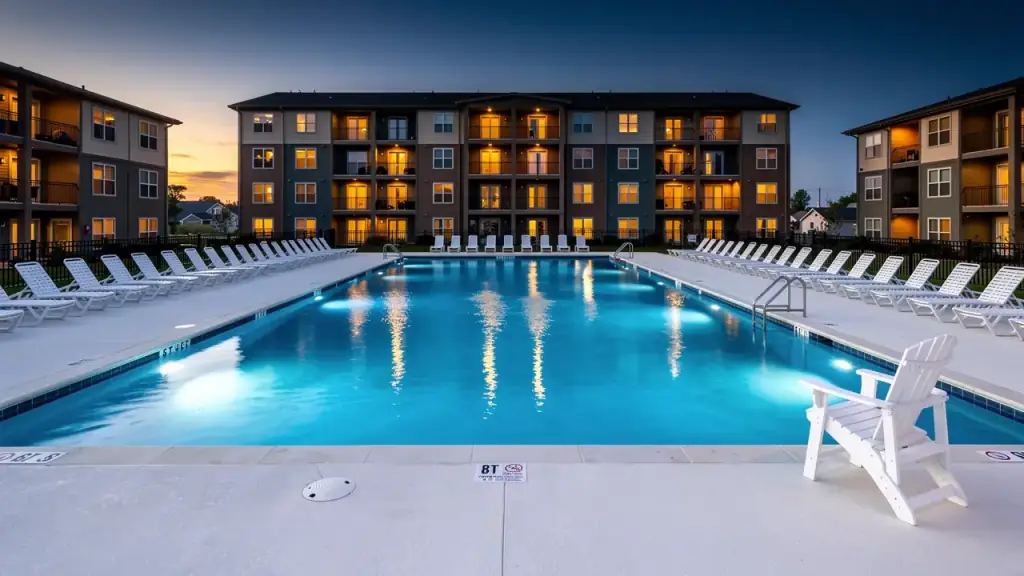
If you manage a pool at an apartment complex, a gym, a school, or a hotel, you already know it isn't a bigger version of a backyard pool. It's a shared amenity with a lot of people depending on it and a lot of eyes on it. When it's clean and open, nobody thinks about it. When it's cloudy, closed, or making a noise, you hear about it fast.
That puts a different set of demands on whoever services it. Here's what a property manager or facility owner should reasonably look for.
Heavier use means faster wear
A family pool might see a few swimmers on a weekend. A commercial pool may see dozens in a day, with a steady stream of sunscreen, body oils, and everything else that comes along. That changes the water chemistry quickly and puts a heavy load on the filters.
The equipment works harder as well. Pumps and heaters on a commercial pool often run longer hours, and filters collect more material. Wear that takes years at a house can show up much faster on a pool that gets constant use. That's why commercial equipment needs a close and regular eye, and it's why small problems can't be left to sit.
Consistency is the product
The main thing a commercial service provides is reliability. A residential owner might tolerate a pool that's a little off for a few days. A hotel guest or a gym member won't. The pool has to be clean, clear, and ready whenever people expect to use it.
That means regular visits, consistent testing, and the discipline to catch a drift in the water before it becomes a closure. A good service partner treats the schedule as a commitment and tells you plainly if something is going to affect the pool's availability.
Equipment that's bigger and more varied
Commercial pools are often served by larger pumps, bigger filters, and heat pumps or heaters sized for the water volume. The systems are more involved than what sits behind a typical house. A service company working on them needs real experience with that equipment, not just general pool knowledge.
The scope of repair work is also wider. Hotels and gyms may have pools that are heated through the year. Apartment complexes may have older systems that have been patched more than once. Schools may have pools that sit idle in some seasons and run hard in others. A good provider can work across all of that, from heat pumps to filters.
What to ask a prospective pool service
- Who actually does the work, and how are they trained? Moonlight's team is made up of certified and trained specialists.
- What equipment do they work on? Ask specifically about heat pumps, large filters, and commercial-grade pumps.
- How do they handle a problem found during a routine visit? You want a clear explanation and a recommendation, not a surprise.
- Can they handle repairs as well as routine service? Having one company do both saves coordination.
- How do they communicate? When something is wrong, you want a call or message that tells you what it is and what happens next.
It's also worth asking about regulations. Requirements for commercial and public pools vary, and they can involve inspections, operating rules, and record keeping. Check with your county to find out what applies to your property. A good service company can work alongside whatever your property needs to follow, but the requirements themselves come from the people who set them.
When a pool starts to look rough
Every commercial pool eventually shows its age. Tile that's stained, equipment that's loud, water that never quite clears, a heater that can't keep up, a pad covered in rust. These problems tend to build slowly, so the people who see the pool every day stop noticing them. A fresh pair of eyes can see what's slipped.
When that happens, a thorough inspection is a good starting point. It gives you a picture of what's actually wrong, in order of how urgent it is, so you can plan the work instead of reacting to the next failure. A small repair now, planned with the pool's schedule in mind, beats an emergency closure in the middle of peak season.
Planning around the seasons
Southern Maryland pools run on a seasonal rhythm. Openings in spring, heavy use in summer, closings in fall for many properties. Each transition is a chance to catch problems, and each one is easier when it's planned. Scheduling the opening early enough to fix whatever turns up, and the closing early enough to beat a freeze, protects both the equipment and the pool's availability when people want it.
Why one provider helps
A commercial pool is easier to manage when one company knows the whole picture: the history of the equipment, what's been repaired, what's coming due. If routine service, repairs, chemicals, and seasonal work all come from the same place, problems don't fall into the gaps between vendors, and nobody has to explain the pool from scratch every time.
Moonlight Pool and Spa Service works on commercial pools for apartment complexes, gyms, schools, and hotels in St. Mary's County, from heat pumps to filters. See the Commercial pool repair page for what's covered, or call (410) 610-8036 to talk about your property's pool.
Moonlight Pool & Spa Service, (410) 610-8036
Call (410) 610-8036More articles
Closing Your Pool for a Southern Maryland Winter, and Opening It Again in Spring
A pool closing is mostly about keeping water out of places it can freeze, and an opening is where you find out if that worked.
Three Signs Your Pool Equipment Needs a Repair, and What Each One Usually Means
Pool equipment rarely fails without warning, and the warnings come as leaks, rust, and noise.