Closing Your Pool for a Southern Maryland Winter, and Opening It Again in Spring
A pool closing is mostly about keeping water out of places it can freeze, and an opening is where you find out if that worked.
October 27, 2026 · 4 min read
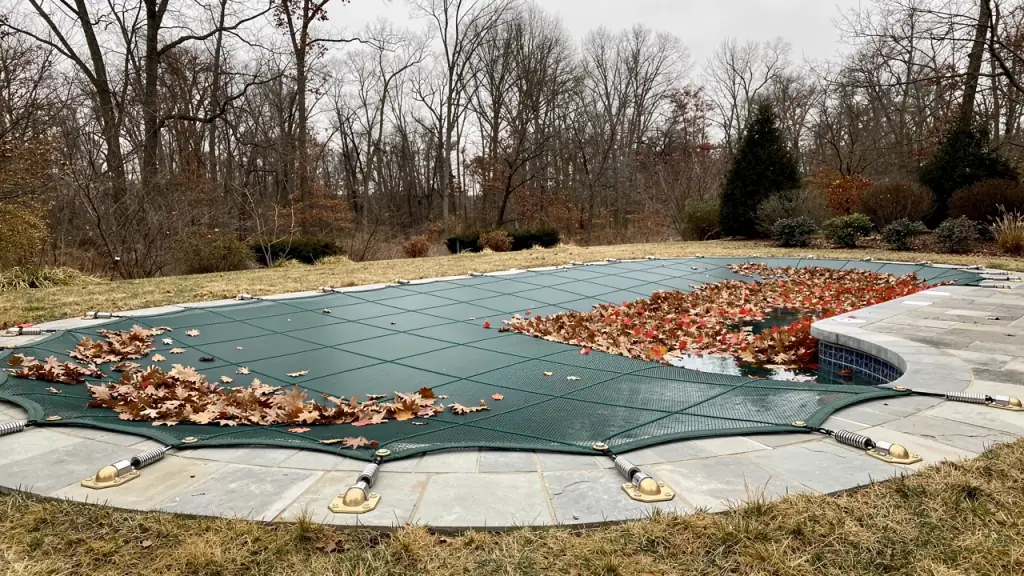
Southern Maryland winters aren't Minnesota winters, but they're cold enough to do real damage. A few nights in a row below freezing is all it takes for water sitting inside a pump, filter, or plumbing line to turn to ice. Ice expands, and whatever it's expanding inside loses. Usually that's a cracked pump housing, a split fitting, or a burst line. That's the whole reason pools get closed, and it's also why a closing done halfway can cost more than skipping it.
What a closing is actually for
A closing has two jobs. The first is keeping the equipment and plumbing from freezing. The second is keeping the water and the pool surface in decent shape during the months nobody is looking at them. Skip the first job and you may be shopping for parts in April. Skip the second and you may be opening something closer to a pond than a pool.
Here's what a proper closing generally involves. The exact steps change with the pool, the equipment, and the type of cover, but the list below covers the ground.
- Cleaning the pool first, because leaves and debris left in the water break down over the winter and feed algae.
- Balancing the water chemistry so it stays stable while it sits, rather than drifting into a range that stains or etches surfaces.
- Lowering the water level to a point that suits your cover and your plumbing layout.
- Draining the pump, filter, heater, and any other equipment so no water is left inside to freeze.
- Clearing the plumbing lines of water and plugging them so nothing runs back in.
- Putting on a cover that's properly secured and able to do its job through rain, wind, and the occasional snow.
Not every pool closes the same way. An inground pool with a safety cover is handled differently from one with a solid cover or a floating winter cover. Heaters, salt systems, and automatic cleaners each have their own drain-down and storage steps. That's one reason a lot of owners hand this job off instead of working from a half-remembered checklist.
The mistakes that show up in March
The most common one is leaving water in the equipment. A pump basket that looks empty can still have water in the housing. A filter tank holds more than most people expect. A heater has internal passages that are easy to forget. If any of that freezes, you won't know until spring, when you start the system and something drips that shouldn't.
The second is closing a dirty pool. Leaves, pollen, and grit that stay on the floor decompose, tint the water, and can leave stains on the surface. Opening day then turns into a cleanup day, and the chemical bill goes up with it.
The third is a poor cover job. A cover that sags, shifts, or collects a pond of its own lets debris and rainwater into the pool and puts strain on the edges. It's worth walking out and looking at it after a heavy storm. If water is pooling on top, deal with it before it gets worse, and if the cover has slipped, get it back in place.
Opening in spring
An opening is the closing in reverse, with a few extra checks. The cover comes off, ideally cleaned and dried before it goes into storage. The plugs come out of the plumbing, the equipment gets reconnected, and the water level comes back up. Then the pump and filter start, and the first real test begins. Does the system hold water, circulate, and run quietly?
This is also when winter's damage shows itself. A cracked fitting, a pump that won't prime, a heater that heats poorly. It's far better to find those in April than on the first hot weekend in June, when everyone wants to swim and every pool company is busy.
A few things are worth checking yourself once the equipment is running:
- The equipment pad: any drips, wet spots, or fresh rust around the pump, filter, and heater.
- The pump: does it prime without a struggle, and does it run without grinding or screaming?
- The filter pressure gauge: a steady, reasonable reading, not one pinned high or sitting at zero.
- The water level: high enough for the skimmer to pull water properly.
- The water itself: once circulation has been running for a while, is it clearing up or getting cloudier?
Opening too early has its own risk
Spring around here can swing from warm to frosty within a few days. Once the equipment is reconnected and full of water, it's exposed to freezing again just like it was in the fall. If a late cold snap is in the forecast, the opening can wait. A pool can sit under a clean cover a little longer without much harm. A cracked heater can't be undone with patience.
Moonlight Pool and Spa Service handles pool openings and closings for homeowners in California, Leonardtown, Hollywood, and Lexington Park, and it does the work with certified and trained specialists. See the Pool openings and closings page for what's covered, or call (410) 610-8036 to talk through your pool and your timing.
Moonlight Pool & Spa Service, (410) 610-8036
Call (410) 610-8036More articles
Three Signs Your Pool Equipment Needs a Repair, and What Each One Usually Means
Pool equipment rarely fails without warning, and the warnings come as leaks, rust, and noise.
What a Weekly Pool Maintenance Visit Actually Covers
A good maintenance visit is a short list of jobs done consistently, and the point is to catch problems before they grow.